
“We made it, James,” I said to my friend with the best seat in the house, atop my right shoulder with a view of the Rocky Mountains as I leaned against the hood of the car at a pull off outside of Aurora. A Polaroid of the moment – arrowheads from indigenous giants pointing into the swirling blue sky – would’ve been labeled, “Denver in June, Hazy Heat, Deacon Soon”.
“My name is Wayne Campbell. I live in Aurora, Illinois, which is a suburb of Chicago. Excellent. I’ve had plenty of jo-jobs; nothing I’d call a career. Let me put it this way: I have an extensive collection of name tags and hairnets.”
You finished?
“Finished.”
We resumed the drive west into the city.
“Don’t act like you don’t have it memorized like me, too.”
Depends on when you think I came to be?
“That’s a good question.”
There’d been the time I forgot my comic book in Paul Newman’s hotel room and walked in on him doing lines of cocaine off a woman’s butt cheek. I remembered then, driving west with hands tapping the steering wheel to the beat of “Axel F” by Harold Faltermeyer from the Beverly Hills Cop soundtrack, that the dollar bills Paul and Larry gave me for the vending machines were always curled up and covered in dust. Dad gave coins, pulled from an ashtray or a pocket, covered in ash and lint.
There’d been the time a drunk fan grabbed Meredith’s foot and yanked her into the crowd. Dad calmly said, “One moment, folks,” and hopped off the stage. He grabbed the dude by the shirt collar and smashed fist to nose. He hopped back onto the stage while blood spurted from the dude’s face.
“Anyone else touches someone on this stage, I’ll knock your fucking teeth out. Lush Factory on two. Uh one and two and one, two, three, four.”
The sometimes panic of memories and what they’d done to create me crept in. I rolled the window down and blew air through my pursed lips. Dry wind rubbed my hand surfing outside the window.
Sooner than I thought, maybe. Memories are just that: memories. You don’t have to confront them and cause drama. This isn’t a drunk fan touching Meredith. It’s your past. Considering it fully with intention can only help you heal.
“You sound like my therapist.”
Tupelo Honey came on the radio. Something clicked over in my heart.
What do you think I’m doing during your sessions? I’m listening and taking notes. That way when a memory appears suddenly and smacks you in the face, you have the tools to handle it appropriately. Tears are okay, by the way. I think you know that by now, but they’re free falling down your face right now and one thing I can’t do is dry them. But I can help you understand that there’s nothing wrong with crying. On the contrary, when we don’t cry, we don’t release. You want me to get into purging again?
“That’s okay.” I ripped two pieces of paper towel and cleaned my face. I breathed, then exhaled loudly, and then screamed until my throat cracked and hurt.
“Fuck. Why?”
It’s life, man. Chutes and ladders. I don’t know who made that board game, but I do know it was someone who’d been through some shit and wanted to make sure their kids learned hard life lessons early. You’re doing a great job. Keep on rocking forward.
I sucked on my tooth to fight back the last tears. The dammed tears would be the beginnings to the next purge. “Thanks, man.”
Enjoy the drive. I’m taking a nap.
I drove on, entering the city just before dusk. Traffic was lighter than expected. I smelled fresh asphalt.
I quietly sang, “Tail lights light the night on fire, come on, baby, come on over to quench my desire.”
Sometimes I made up lyrics to songs that didn’t exist – a product, I figured, of watching Dad write songs. On the bus, in his hotel room, backstage, in the studio, out to lunch. Always with his reporter’s notebook open and full of scribbled observations. “Tell me something about you,” he’d ask his waiter at a diner. He never held his pen at the ready, waiting for them to talk. He’d hide it on his lap first and then ask the question.
“Tell me something about you.”
The different ways they reacted could fill more than the word doc I’m writing this in. Could fill ten of them. Dad loved interacting with people. He didn’t see them as fans, or himself as a celebrity. It was people talking to people.
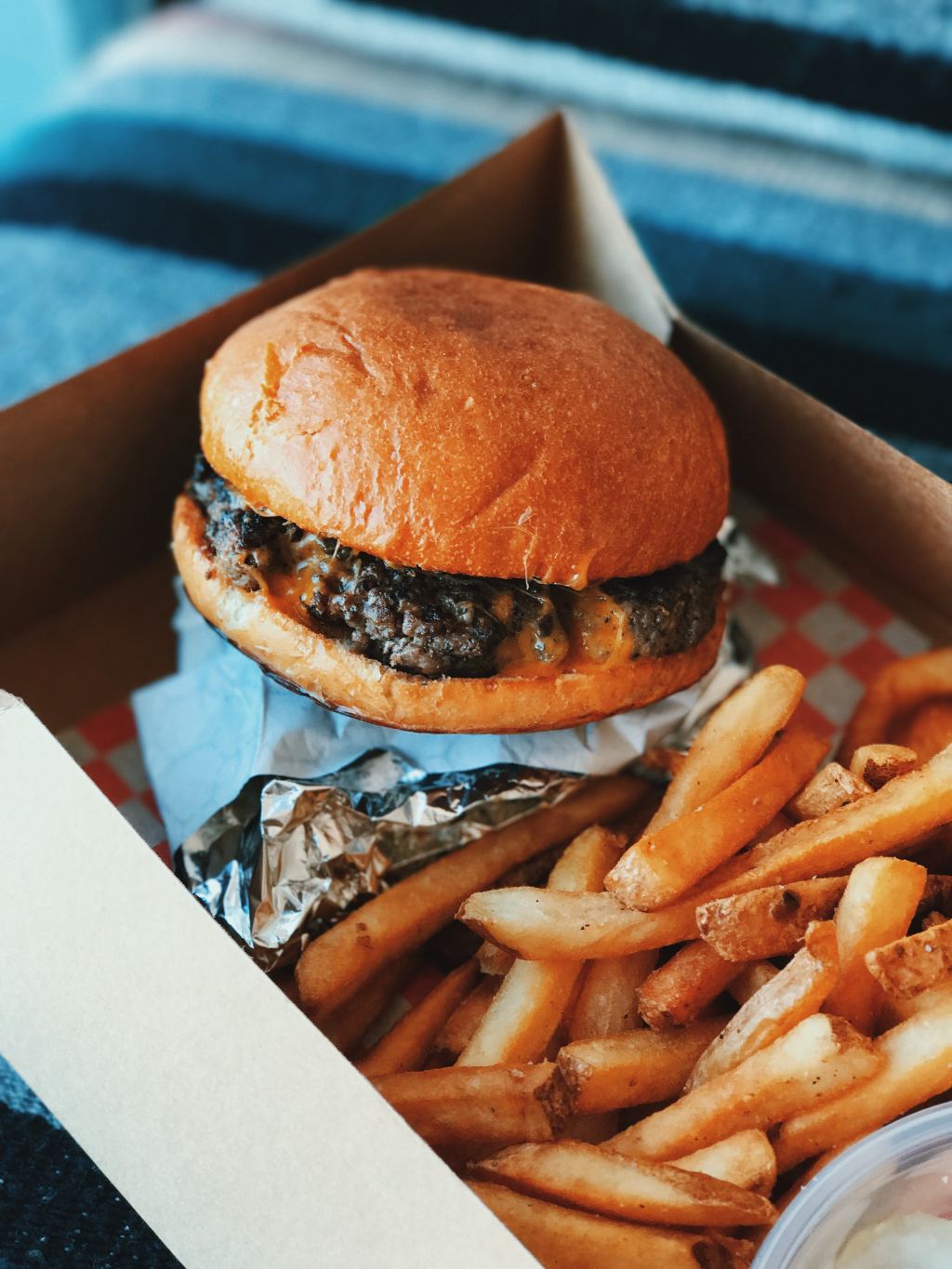
One time we were eating at a burger joint in Phoenix. Bellied up on bar stools. I was young enough that my feet didn’t reach the foot ring of the stool. That was par for the course to be cool with Dad. He made sure I ordered my own burger, my own fries, and my own pop. When I asked for no onions on my burger, he nudged me in the side and said, “Give ‘em a shot, Buck. If you don’t like them, you can wipe ‘em on mine. I think you will.”
So I did.
If anyone needs me after reading this book, and I haven’t offed myself thanks to the help of imaginary James, my therapist, and my own damn hard work realizing life’s hard but not that hard, and too precious to give up, I might be eating an onion raw like an apple. Thanks, Dad.
That evening at the burger joint called Patti’s, the bartender poured Dad a cold beer and me a cold Coke. They had handheld video games back then – Gameboy and Game Gear and cheaper ones through Tiger Electronics – which I’d play in the hotel or on the bus. Dad didn’t let me do it when we were out. He asked me to pay attention to people, to how they acted, and how he interacted.
“Be curious.”
“What’s your name again?” I asked the bartender with my squeaky voice.
He wore a Phoenix Suns jersey, Charles Barkley. Number thirty four. His arms were patched with dark hair and his head the same. He looked like someone who would haul the heavy equipment for Spin Cycle and then drink a beer out of a plastic cup in three seconds.
“They call me Chuck.”
“And what do you call yourself?”
Dad ate his burger with a smirk. He fed a fry into his mouth.
A Phoenix Suns game played on the TVs behind him. One of the TVs lagged, so that Kevin Johnson dribbled around a screen, hesitated, and then shot a floater over David Robinson’s outstretched hand, and by the time the ball rolled around the rim and rimmed out, Kevin Johnson on the other TV was dribbling around the screen once again.
“One damn good bartender,” the guy said, pointing at Dad’s beer. “You want another?”
Dad gave him a thumbs up while he chewed.
“Smart kid you got there.” The one damn good bartender walked to the beer taps.
“You are pretty smart,” Dad said. “You mind if I steal that for a song?”
I ate a fry. “What part?”
“All of it. Parts of it. Definitely the bit about ‘one damn good bartender’, and most likely the name Chuck. That’s stuck in my brain like burnt sugar. Might go on the secret album.” He took another big bite of his burger. “Or,” and he chewed happily, “I’ll go Buffett and sing about cheeseburgers. Cheers to being curious.”
He held his burger up to mine and we knocked them together and ate at the bar in Phoenix, father and son having a Coke and a smile.


 Mike Writes
Leave a comment